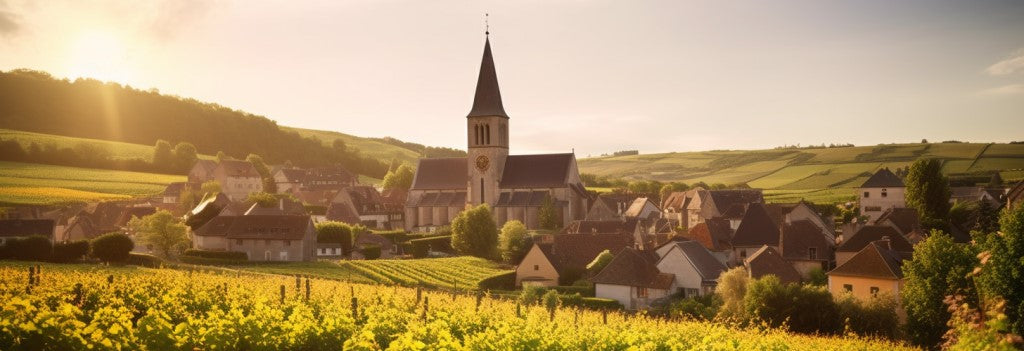
Located at the northern edges of France, the history of the Champagne wine region has had a significant role in the development of this unique terroir. The area's proximity to Paris promoted the region's economic success in its wine trade but also put the villages and vineyards in the path of marching armies on their way to the French capital. Despite the frequency of these military conflicts, the region developed a reputation for quality wine production in the early Middle Ages and was able to continue that reputation as the region's producers began making sparkling wine with the advent of the great champagne houses in the 17th and 18th centuries. The principal grapes grown in the region include Chardonnay, Pinot Noir, and Pinot Meunier. Pinot noir is the most widely planted grape in the Aube region and grows very well in Montagne de Reims. Pinot Meunier is the dominant grape in the Vallée de la Marne region. The Côte des Blancs is dedicated almost exclusively to Chardonnay.
The unique, chalky landscape of the Champagne wine region and the resulting agro-industrial system led to the development of sparkling wines like champagne in the 17th century. As a result, many of the production sites and wine houses in the region were inscribed on the UNESCO World Heritage List in 2015 as part the Champagne hillsides, houses and cellars site.